When I was seven years old, I walked into a small karate dojo in my hometown of Pittsfield, Massachusetts. Some neighborhood kids had been picking on me, and I wanted to get stronger. But when I got inside, my first thought was: Get me out of here.4
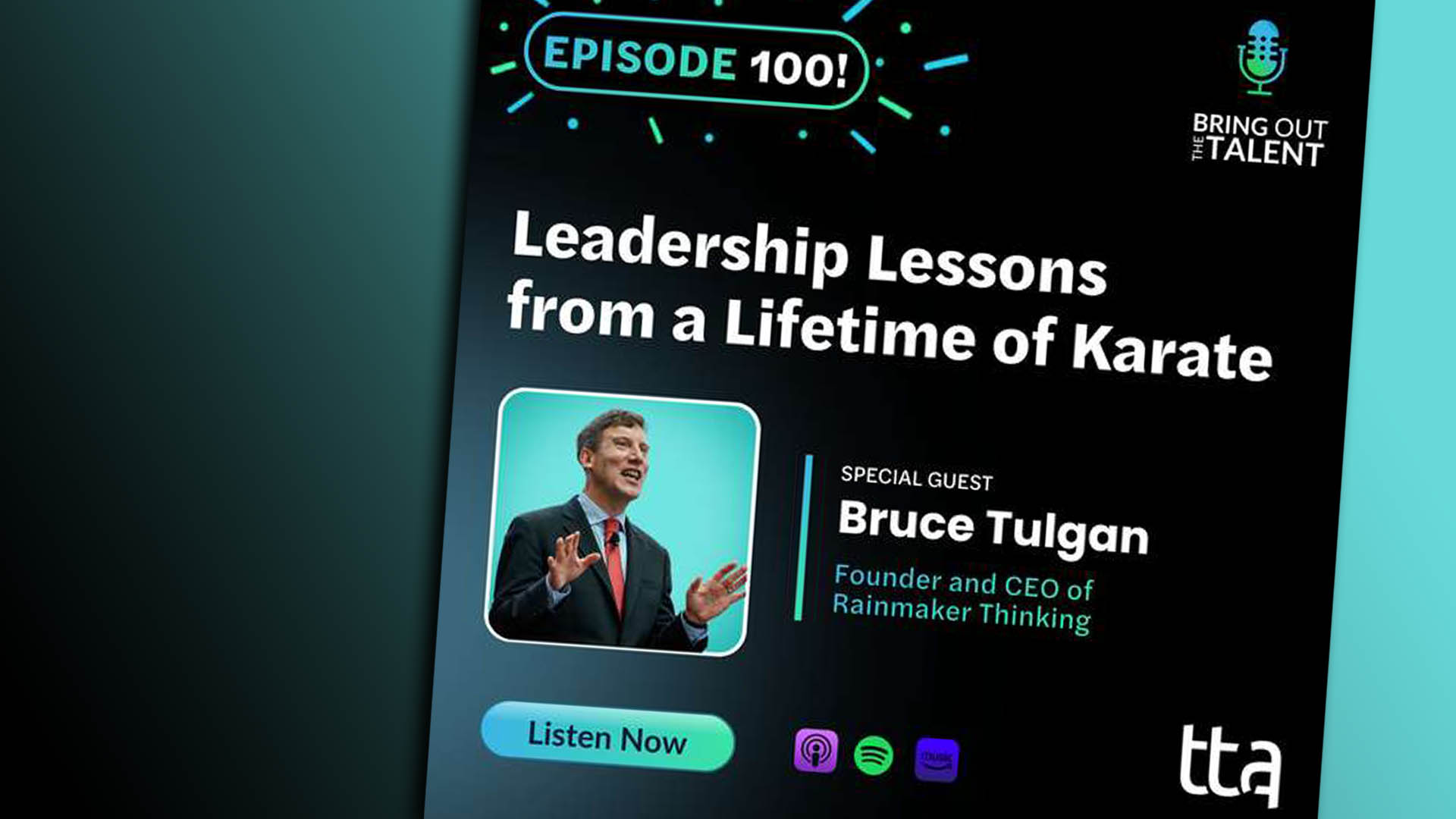
Listen to “Leadership Lessons from a Lifetime of Karate” on Bring Out the Talent.
I stayed. And I had the extraordinary good fortune to study with the same teacher for the next fifty years.
That relationship—and more than five decades of practicing and teaching karate—has shaped how I think about leadership, learning, and helping other people succeed.
I recently returned to Bring Out the Talent for its 100th episode. Having been the podcast’s first guest in 2021, I was especially honored to come back for this milestone. We talked about what has changed in the workplace, what hasn’t, and what leaders can learn from the dojo.
One lesson runs through all of it: Getting better requires practice, honest feedback, and someone who cares enough to pay attention.
You cannot get strong for someone else
My teacher cared about helping me get stronger. He also cared about the stories I told myself: that I was weak, that I should be afraid, that the other kids were stronger than me.
He helped me change those stories by helping me build real strength.
But he couldn’t do my push-ups for me. I had to practice. I had to do the work.
The same is true for managers. You cannot learn a skill for someone else. You cannot take personal responsibility on someone else’s behalf. You cannot do all the work and expect the other person to grow.
What you can do is be there. Pay attention. Explain what good performance looks like. Notice what someone is doing well and where they need to improve. Help them practice, and stick with them as they get better.
That is a serious commitment to another person’s success.
Correction is the love language of learning and teaching
In the dojo, correction is part of the deal. If your hands are down, your teacher tells you to put them up. If your technique leaves you vulnerable, you need to know.
When you are serious about learning, that feedback is valuable. It gives you something specific to work on.
Yet in the workplace, corrective feedback often sounds like bad news. Employees become defensive. Managers worry that they are being mean. So they postpone the conversation until something has gone badly wrong.
That makes correction even harder to hear.
Managers need to make improvement an ordinary part of the conversation. What are you doing well? What needs work? What adjustment should you make next?
It is false kindness to watch someone struggle with a problem you can see and say nothing. When you help someone avoid an unnecessary mistake or master a difficult skill, you are giving that person something valuable.
Make one-on-ones a place to practice improvement
Team huddles serve a purpose. So does written communication. But the one-on-one dialogue is where a manager can focus on the individual.
What does this person need from you? What do you need from them? What are you trying to help them get better at right now?
Think about how a good teacher watches a student practice. The teacher observes closely, identifies an adjustment, explains or demonstrates it, and watches the next attempt.
Managers can bring that same attention to their conversations. Get into the details of the work. Identify a specific skill or behavior to improve. Agree on the next steps. Follow up.
And pay attention to your own performance. Teaching karate has taught me how much I still have to learn. Helping someone else improve requires me to examine my own technique and the example I set.
Keep developing the skills that travel with you
Technology keeps changing. Technical knowledge and skills need constant updating.
At the same time, people need the broad, transferable skills that help them succeed wherever they go: personal responsibility, good work habits, clear communication, a service mindset, and the ability to keep learning.
Those skills need practice, too.
In karate, you keep returning to your stance, balance, timing, and technique. Experience gives you more reasons to work on the fundamentals.
Leadership requires that same discipline. Keep communicating. Keep setting clear expectations. Keep paying attention. Keep helping people get stronger.
The workplace will continue to change. Our responsibility to help each other improve will remain.
Listen to “Leadership Lessons from a Lifetime of Karate” on Bring Out the Talent.